In 2001 the group of “Thought Leaders” gathered for the second time, at a Lodge in Utah, and formally wrote the 4-Core Values and the 12-Principles that make up the Agile Manifesto.
The Signers attending that day stated that the Agile Manifesto was their way to:
Propose a new way of developing software “by doing it and helping others do it.”
The Manifesto reads:
“We are uncovering better ways of developing software by doing it and helping others do it.
Through this work we have come to value:
The 4-Core Values :
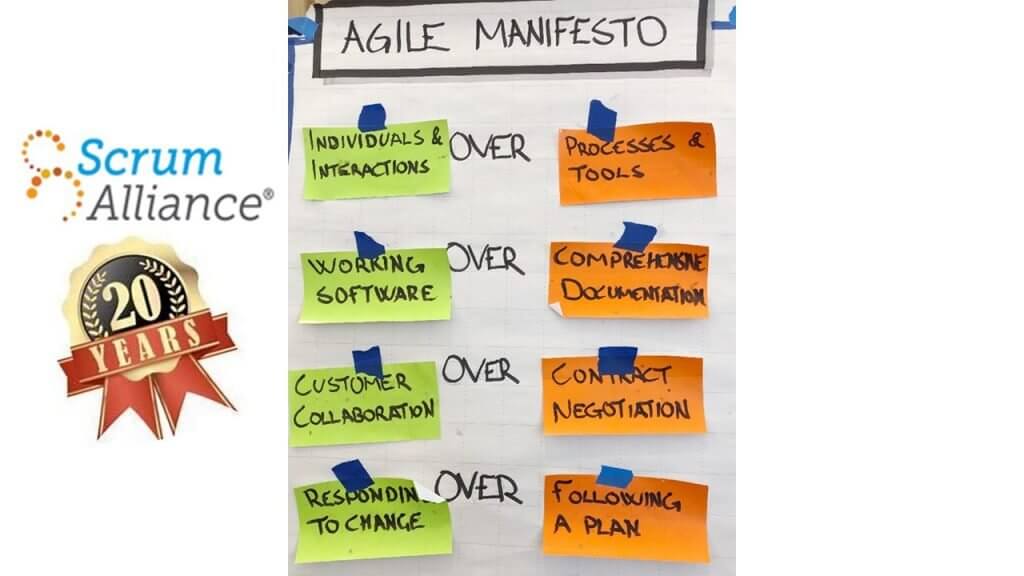
- Individuals and Interactions Over Processes and Tools
Valuing people more highly than processes or tools is easy to understand because it is the people who respond to business needs and drive the development process. If the process or the tools drive development, the team is less responsive to change and less likely to meet customer needs. - Working Software Over Comprehensive Documentation
Agile does not eliminate documentation, but it streamlines it in a form that gives the developer what is needed to do the work without getting bogged down in minutiae. - Customer Collaboration Over Contract Negotiation
The Agile Manifesto describes a customer who is engaged and collaborates throughout the development process. Agile methods may include the customer at intervals for periodic demos. This makes it far easier for development to meet their needs of the customer. - Responding to Change Over Following a Plan
Traditional software development regarded change as an expense, so it was to be avoided. With Agile, the shortness of an iteration means priorities can be shifted from iteration to iteration and new features can be added into the next iteration.
Must Read Also : What is Agile
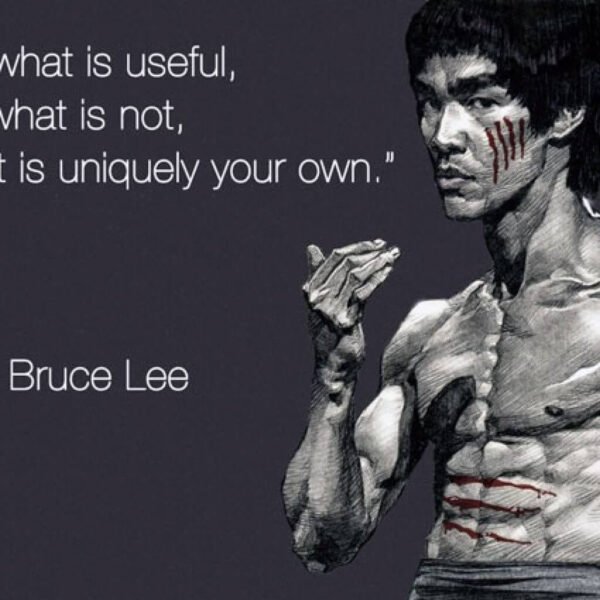
Bruce Lee, died in 1973 at the age of only 32. He was a Kung Fu instructor who became a world-wide legend as the star of what are arguably some of the greatest martial arts movies ever made.
During his career, he adopted this phrase as his life style and it begs the question:
Was he unknowingly an early adopter of the Agile Philosophy OR just a visionary of what would become the Need For Change in the Development Process? You will have to decide that question for yourself?
12-Key Principles
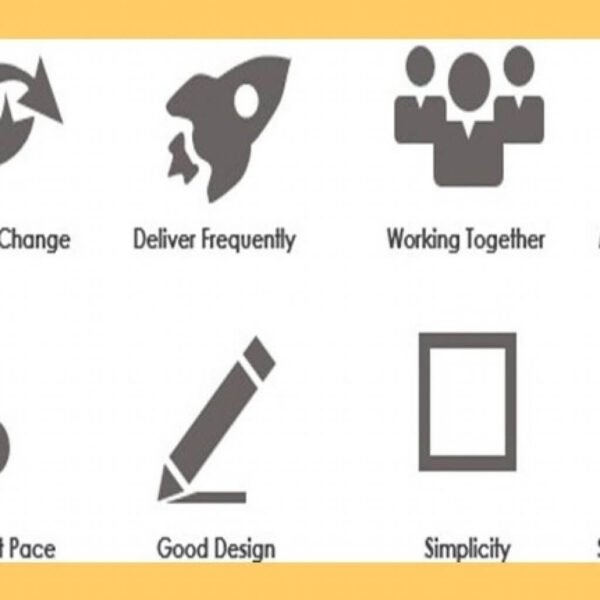
In addition to the 4-Core Values, the signers of the Agile Manifesto also included 12-Key Principles for incremental development that have made Agile what it is today.
Over the 20-years since the signing of the Agile Manifesto, the original document has been used by groups as disparate as Coders to Boy Scout Troops, from Marketing Departments to Restaurants.
Its universality is derived from a group of 12-key principles that can be broadly applied, easily learned, and rarely mastered completely.