Synergy of Agility and AI: Is Agile Dead?
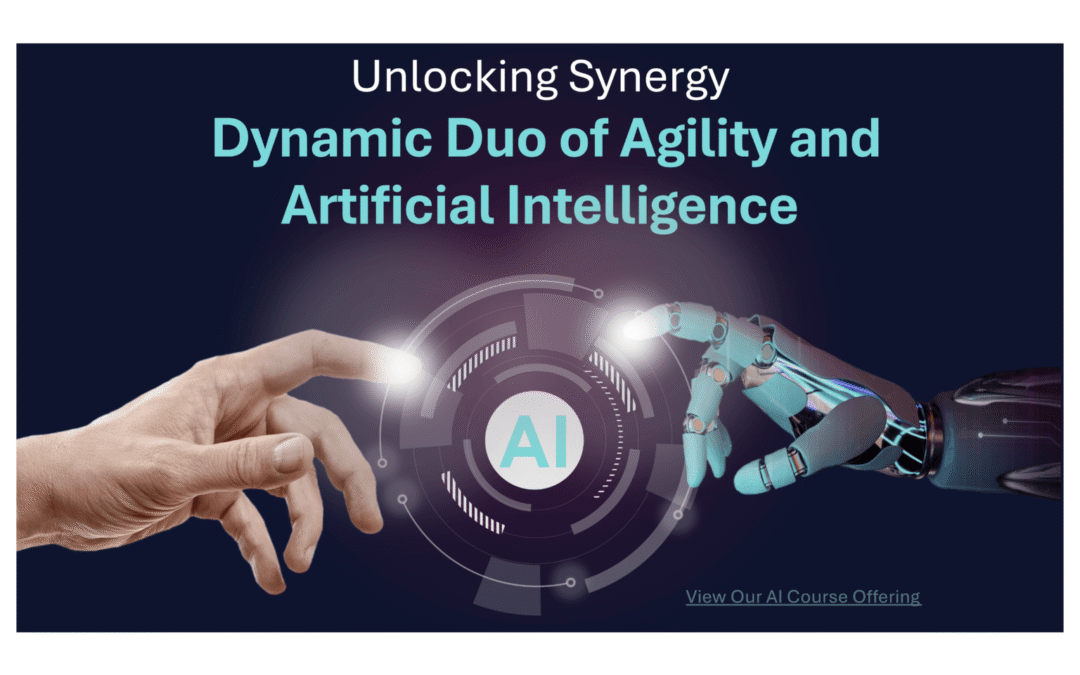
Has Agile become obsolete, or is it simply that large organizations are unable to effectively manage the challenges and issues that Agile methodologies bring to light? It is impossible to go a day without encountering discussions or news regarding AI (Artificial Intelligence). It is the upcoming trend in the sector and is likely to persist for at least another decade. Agility remains a requirement in AI projects. By combining agile methodologies with Artificial Intelligence (AI), the product development life cycle (PDLC) of AI systems can be significantly improved. Even in the field of AI, it is critical for organization have an ability to adapt swiftly to ever-changing technology landscape and satisfy customers. Read along further to see many more reasons why you still need to be agile in AI projects. So, let us help you supercharge your AI projects with agility.
The “Agile is dead” myth ignores agile’s concepts of flexibility and ongoing improvement, which are still essential in AI and data analytics. Agile approaches encourage quick iterations and feedback, which are crucial for managing AI projects’ complex and dynamic nature. Teams are able to react quickly to fresh data insights and technology developments thanks to them, which keeps solutions current and efficient. Agile’s adaptable structure is hence essential for the accomplishment of AI and data analytics projects.
Agile Development:

Agile is a product development approach that prioritizes customer satisfaction, design thinking, outcome over output, continuous collaboration, continuous improvement, and adaptability. It is characterized by its flexibility and iterative approach. The traditional big bang approach is divided into smaller sprints, which are time boxed and manageable increments that enable continuous feedback and improvement. Scrum and Kanban are both agile approaches based on lean thinking that promotes a cross-functional team structure, regular communication, quick customer feedback, improve flow, reduce WIP – Working In Progress and continuous delivery of product increments.
Artificial Intelligence (AI):

From the father of Artificial Intelligence, John McCarthy, it is “The science and engineering of making intelligent machines, especially intelligent computer programs”.
Artificial Intelligence is a way of making a computer, a computer-controlled robot, or a software think intelligently, in the similar manner the intelligent humans think. AI is achieved by studying how human brain thinks, and how humans learn, adapt, decide, and work while trying to solve a problem, and then using the outcomes of this study as a basis of developing intelligent software and systems. Modern technological advancements of Artificial intelligence that enables machines to conduct our day-to-day tasks that normally need human cognitive abilities by replicating human intelligence.
The agile approach is extremely critical in the development of AI systems, applications, and products since you still need faster feedback, customer focused solutions, efficient processes, and adaptable product increments. Being agile in AI projects yields substantial advantages in the creation of artificial intelligence applications.
Artificial Intelligence – Intelligent Systems
While studying artificially intelligence, you need to know what intelligence is. Let’s learn Idea of intelligence, types, and components of intelligence.
What is Intelligence?
Intelligence in Artificial Intelligence (AI) refers to cognitive abilities of a system such as: learning, reasoning, computing, logically making connections, solving problems, automating repetitive tasks, and understanding languages.
Types of Intelligence
As described by Howard Gardner, an American developmental psychologist, the Intelligence comes in multi fold:
| Intelligence | Description | Example |
| Linguistic intelligence | The ability to speak, recognize, and use mechanisms of phonology (speech sounds), syntax (grammar), and semantics (meaning). | Narrators, Orators |
| Musical intelligence | The ability to create, communicate with, and understand meanings made of sound, understanding of pitch, rhythm. | Musicians, Singers, Composers |
| Logical-mathematical intelligence | The ability of use and understand relationships in the absence of action or objects. Understanding complex and abstract ideas. | Mathematicians, Scientists |
| Spatial intelligence | The ability to perceive visual or spatial information, change it, and re-create visual images without reference to the objects, construct 3D images, and to move and rotate them. | Map readers, Astronauts, Physicists |
| Bodily-Kinesthetic intelligence | The ability to use complete or part of the body to solve problems or fashion products, control over fine and coarse motor skills, and manipulate the objects. | Players, Dancers |
| Intra-personal intelligence | The ability to distinguish among one’s own feelings, intentions, and motivations. | Gautam Buddhha |
| Interpersonal intelligence | The ability to recognize and make distinctions among other people’s feelings, beliefs, and intentions. | Mass Communicators, Interviewers |
Benefits of Agility and Agile Practices for AI Projects
| Agile Practice | Description | Benefits for AI Projects | Example |
| Iterative Development | Creating AI models in small, incremental iterations. | Allows for continuous improvement and rapid response to feedback. | Developing an AI model with regular updates based on new data. |
| Frequent Testing | Continuous testing of AI models and algorithms throughout development life cycle. | Early detection of issues, ensuring high model accuracy and reliability. | Continuous Integration/Continuous Deployment (CI/CD) pipelines for ML models. |
| Collaboration and Communication | Enhancing collaboration between cross-functional teams, including AI data scientists, AI engineers, and stakeholders. | Improved understanding of shared vision, goals and challenges, leading to better solutions. | Quarterly Planning, Sprint planning, Daily check points, and sprint reviews involving all stakeholders. |
| Adaptive Planning | Flexible planning that adapts to changing requirements and discoveries. | Ability to pivot based on new insights or changes in project scope. | Adjusting the plan based on early feedback. |
| Customer Involvement | Regularly involving customers and stakeholders in the development process. | Ensures the AI solution meets real-world needs and expectations. | Bi-weekly demos to stakeholders for feedback on AI features. |
| Incremental Delivery | Delivering small, functional parts of the AI system regularly. | Provides early value to users and reduces time-to-market. | Deploying a basic version of an AI chatbot early for user feedback. |
| Retrospectives | Regularly reflecting on the process to identify and implement improvements. | Continuous improvement in development practices and team performance. | Post-sprint retrospectives to discuss what worked and what didn’t. |
| User Stories and Backlog | Using user stories to define requirements and maintaining a prioritized backlog. | Clear understanding of user needs and structured prioritization of tasks. | Creating user stories for AI features like data preprocessing, model training, etc. |
| Automated Testing | Implementing automated tests for AI models and data pipelines. | Enhances testing efficiency and ensures consistent performance. | Using automated tools to validate model performance against new datasets. |
| Continuous Feedback Loop | Establishing feedback loops from model performance to development team. | Enables quick adjustments and improvements based on real-world performance. | Monitoring deployed AI models and feeding performance data back to the development team. |
Let’s see few examples of AI applications across various industries.
| Field | AI Application | Example | Description |
| Healthcare | Medical Diagnosis | IBM Watson for Oncology | AI analyzes patient data and provides treatment recommendations. |
| Drug Discovery | Atomwise | Uses AI to predict new drug candidates by analyzing molecular structures. | |
| Personalized Medicine | Tempus | Combines clinical and molecular data to tailor treatments to individual patients. | |
| Finance | Fraud Detection | PayPal | AI detects suspicious activity and fraudulent transactions in real-time. |
| Algorithmic Trading | Renaissance Technologies | Uses AI models to execute high-frequency trading strategies. | |
| Credit Scoring | Zest AI | AI assesses creditworthiness of individuals and businesses. | |
| Retail | Personalized Recommendations | Amazon’s Recommendation Engine | Suggests products to customers based on their browsing and purchase history. |
| Inventory Management | Walmart’s AI Supply Chain | AI predicts product demand and optimizes stock levels. | |
| Customer Service Chatbots | H&M’s Virtual Assistant | Handles customer inquiries and provides support through chat. | |
| Transportation | Autonomous Vehicles | Tesla Autopilot | Uses AI for self-driving car functionalities like lane-keeping and parking. |
| Traffic Management | Google Maps | AI predicts traffic conditions and provides optimal routing. | |
| Ride-sharing Optimization | Uber’s Surge Pricing | Adjusts prices based on demand using AI algorithms. | |
| Manufacturing | Predictive Maintenance | Siemens Predictive Services | AI predicts equipment failures and schedules maintenance. |
| Quality Control | Landing AI’s Visual Inspection | Uses computer vision to detect defects in products. | |
| Supply Chain Optimization | DHL’s AI-based Logistics | AI optimizes routes and manages inventory levels. | |
| Education | Personalized Learning | DreamBox Learning | AI adapts math lessons to individual student’s learning pace and style. |
| Automated Grading | Gradescope | AI assists in grading assignments and exams. | |
| Tutoring Systems | Carnegie Learning | Provides AI-driven tutoring and feedback to students. | |
| Energy | Energy Consumption Optimization | Google DeepMind’s Energy Management at Data Centers | Reduces energy use by predicting cooling needs. |
| Renewable Energy Forecasting | IBM’s Wind Power Forecasting | Predicts wind patterns to optimize wind turbine operations. | |
| Smart Grid Management | GE’s Grid Solutions | Uses AI to manage electricity distribution and improve efficiency. | |
| Entertainment | Content Recommendation | Netflix’s Recommendation System | Suggests movies and shows to users based on viewing history. |
| Game AI | OpenAI’s Dota 2 Bots | Uses AI to compete with human players in complex strategy games. | |
| Music Composition | AIVA | AI composes original music tracks. | |
| Agriculture | Crop Monitoring | John Deere’s AI-powered Equipment | Uses computer vision to monitor crop health and detect pests. |
| Yield Prediction | Climate FieldView | AI predicts crop yields based on various data inputs. | |
| Precision Farming | Blue River Technology’s See & Spray | Uses AI to identify and precisely target weeds. |
So, if you think agile is dead, either you are naïve or your organization do not have courage to handle what agile exposed in your organization or some half haphazard agile transformation experience provided you bad taste in your mouth. Doing agile is easy however being truly agile requires change in your organization system, culture, and mindset. Read more on Napoleon Hill’s quote: ‘Patience, persistence and perspiration make an unbeatable combination for success.’
Are you ready to dive in to learning AI? Check out our Virtual Artificial Intelligence course offered with Penn State Great Valley, PA, USA: Leading Artificial Intelligence with ML and DL Training.
Join our Responsible AI with SAFe microcredential.
Join our AI for Scrum Master microcredential.
AI is transforming information security by improving threat detection, vulnerability test, automating responses, and enhancing overall security protocols. Be a leader in Cybersecurity and consider our Certified Information Systems Security Professional boot camp course.
Also consider data driven business analysis career with our IIBA certified courses such ECBA, CCBA, and CBAP:
Here are few Case Studies on Agile at scale:
Large Scale Scrum Case Studies
Additional Reading on Agile:
- Why Product Mindset? Project vs Product Mindset
- Reevaluate your Enterprise level portfolio planning
- What is a difference between Product Owner and Product Manager?
In general, perseverance, patience, and a willingness to pay attention to their issues are needed while pitching agile to management. You may persuade management to adopt agile and enjoy its numerous advantages by outlining its advantages and offering a clear roadmap for implementation.
Do you have agile organization culture to successfully lead digital transformation, business transformation? We offer customized Agile organization culture training to executives. Partner with DailyAgile and let us help you accelerate business agility, check out our upcoming workshops at: https://dailyagile.com/courses/. Contact us, if you are looking for free 1 hour webinar on any agile topic with your agile leaders. We wish you best luck in your agile journey.
By DailyAgile, 1.800.758.AGILE(2445)